
Back in February, a Chinese livestreamer accidentally revealed one of the internet’s worst-kept secrets: modern beauty is often just good software working overtime.
During a routine broadcast, the influencer’s beauty filter suddenly crashed mid-stream. The transformation happened live. Smooth skin reverted to natural texture, facial proportions shifted back to normal, and the polished digital persona viewers recognised disappeared in real time.
Within moments, roughly 140,000 followers were gone.
Clips of the moment spread quickly across Douyin — China’s version of TikTok — where livestream culture moves at a relentless pace and image is currency. The reaction wasn’t outrage so much as fascination. Audiences weren’t shocked filters existed; they were stunned by how dramatic the difference looked once the illusion failed.
Looking back, the incident feels less like a scandal and more like a case study in how the online beauty economy actually works.
Filters today are no longer playful add-ons. They’re embedded tools across fashion, influencer marketing and subscription platforms such as OnlyFans. Skin smoothing, facial reshaping, eye enhancement and automated lighting corrections operate quietly in the background, creating a consistent aesthetic that audiences come to expect.
There’s an unspoken contract between creator and viewer. Enhancement is acceptable — even assumed — as long as the performance remains convincing. The technology doesn’t hide reality; it curates it.
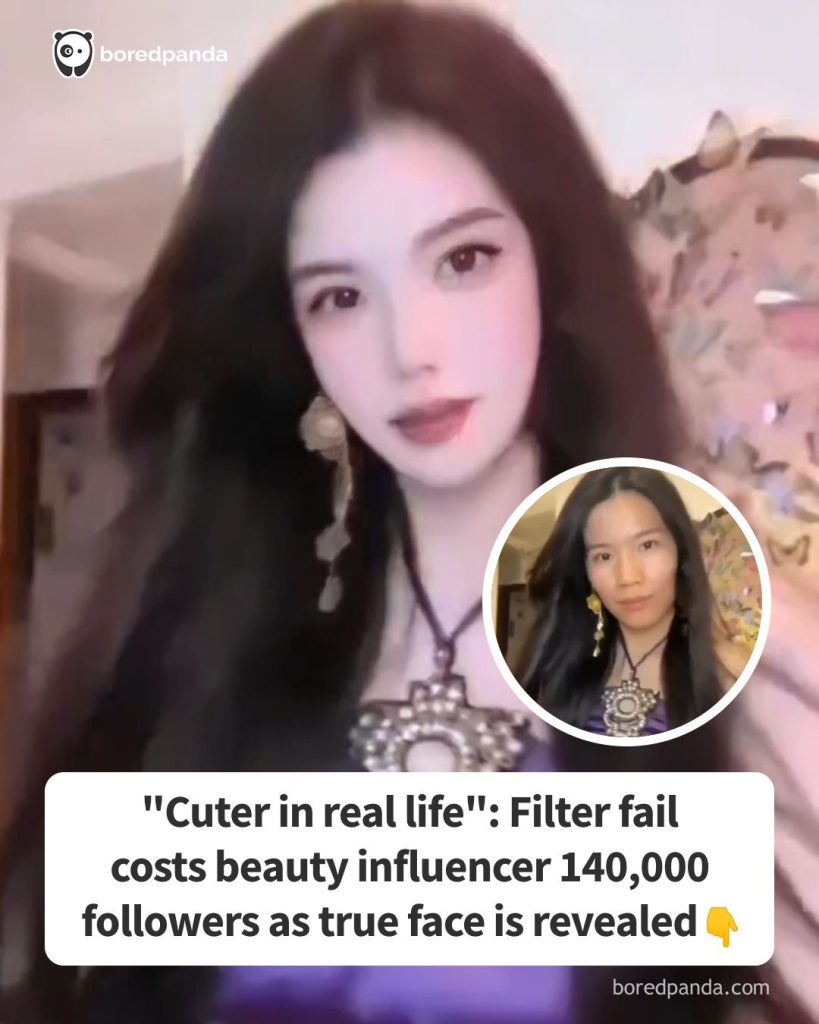
But when that system breaks, the illusion collapses instantly. Followers aren’t necessarily rejecting authenticity; they’re reacting to a sudden mismatch between expectation and presentation. Online fame depends on consistency, and filters provide that stability.
Across Instagram fashion shoots, livestream shopping channels and adult subscription content, digital enhancement has become the modern equivalent of studio lighting or professional retouching. The difference is speed. What once happened in post-production now happens live.
The February filter failure simply pulled back the curtain for a moment.
It reminded everyone watching that the influencer economy isn’t built purely on beauty or personality. It’s built on presentation — and presentation, increasingly, runs on code.
When the code glitches, the fantasy flickers. And sometimes, thousands of followers vanish with it.
Last modified: April 24, 2026